
Acrylic Bone Cement
Description
A medical-grade acrylic bone cement used to securely fix orthopedic implants and fill bone defects during orthopedic procedures. It provides strong fixation, excellent stability, and long-lasting support for successful surgical outcomes.
Key Features
- Strong implant fixation
- Excellent mechanical stability
- Easy to mix and apply
- Fast setting time
- Suitable for various orthopedic procedures
Manufacturer: Ningbo HICREN Biotechnology Co., Ltd / China
To order, call: (+855) 093 265 939 (24/7 support)
Model and Specification Table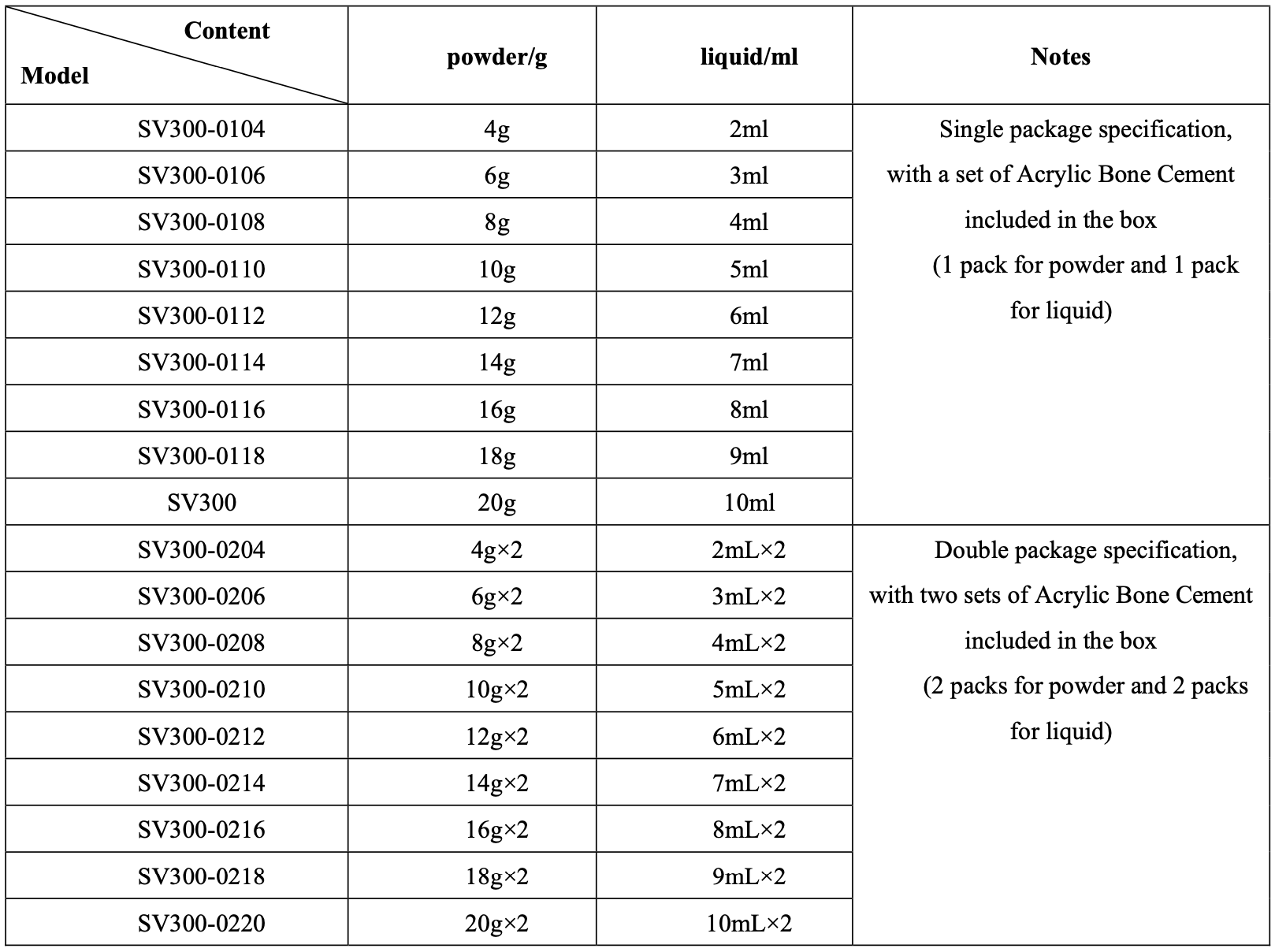
Product Composition
This product consists of two parts: liquid and powder; The specific components of the powder are:
- 15%(wt%)Polymethyl methacrylate
- 55%(wt%)Methyl methacrylate styrene copolymer
- 30%(wt%)Barium sulfate[Benzoyl peroxide containing 3.3% (wt%, as a proportion of barium sulfate)]
The specific compositions of the liquid are:
- 97.5%(vol%)Methyl methacrylate (monomer)
- 2.5%(vol%)N. N-Dimethyl p-Toluidine
- 75±15ppm Hydroquinone
Indication: This product is mainly used to treat vertebral compression fractures caused by osteoporosis.
Contraindication
Acrylic Bone Cement is prohibited for the following patients:
- Vertebral tuberculosis and bacterial infection;
- The posterior edge of the vertebral body has extensive and incomplete bone destruction on a large scale;
- The degree of vertebral compression exceeds 70%;
- Pregnancy or planned pregnancy during surgery;
- Osteomyelitis and epidural cysts;
- Severe compression of the spinal cord at the affected vertebral segment or secondary spinal stenosis;
- Patients with severe pulmonary insufficiency, coagulation disorders, sepsis, and other unsuitable conditions for surgery.
Warning Information
- Read and understand the instructions for use; It is important to be familiar with Acrylic Bone Cement before use.
- In order to use Acrylic Bone Cement safely and effectively, surgeons must have received special training and have some experience; Fully familiar with the characteristics, operating features, and usage methods of this product.
- When performing any surgery, doctors are responsible for determining whether this device and specific methods are suitable for a particular patient. As a manufacturer, HicRen does not recommend specific surgical techniques.
- Only qualified doctors who have received training in the operation of percutaneous Acrylic Bone Cement delivery can use this Acrylic Bone Cement.
- The use of Acrylic Bone Cement can cause adverse reactions in the cardiovascular system. Some patients have experienced hypotensive reactions, and some have developed into cardiac arrest. During and shortly after the use of Acrylic Bone Cement, it is important to closely observe the patient’s blood pressure changes.
- Special precautions should be taken to detect and correct sudden drop in blood pressure, which can occur when this product is implanted into bone.
- It has been proven that for sensitive individuals, methyl methacrylate can cause high sensitivity and lead to allergic reactions.
- Patients without pathological conditions are not recommended to use this product, as these conditions include primary or secondary osteoporosis or tumors, which can affect the patient’s healing ability under conservative treatment.
- Clinical trial data shows that strict adherence to good surgical norms and techniques is absolutely necessary. Deep wound infection is a serious postoperative complication that may require the complete removal of embedded Acrylic Bone Cement. Deep wound infections can be latent and may not show any symptoms of infection even for several years after surgery.
- Considering that liquid monomers are volatile and flammable, the operating room should have good ventilation in order to eliminate the volatile gases of the monomers as much as possible. Be extra careful when mixing the two ingredients to avoid excessive exposure to concentrated monomer volatile gases, which may irritate the respiratory tract and eyes, as well as the liver.
- The liquid component is a powerful lipid solvent. It can cause contact dermatitis in sensitive individuals. Wearing two pairs of surgical gloves and strictly following the mixing method instructions can reduce the likelihood of hypersensitivity reactions. The mixture should be prevented from coming into direct contact with sensitive tissues or being absorbed by the body.
- Poor fixation or unexpected postoperative events may affect the interface between cement and bone, and may cause slight movement of cement on the bone surface. A fibrous tissue layer may be formed between cement and bone. It is recommended to implement long-term regular follow-up for all patients.
- Contact lens wearers are not allowed to approach or participate in the mixing and stirring operation of Acrylic Bone Cement.
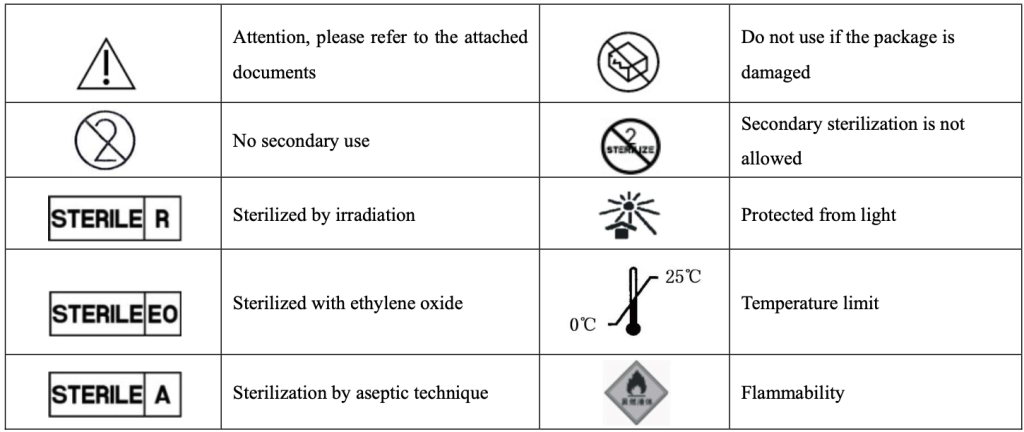
- Only when the packaging is unopened and undamaged, it is in a sterile state. For use by one patient only. Do not reuse or sterilize again.
- When mixing liquid and powder components, extra care should be taken to ensure that all contents of ampoules and small bags are used. The liquid monomer and powder components should be thoroughly mixed. In vitro research data shows that monomer loss is mainly caused by frequent stirring, followed by prolonged stirring time. Please follow the instructions provided by the mixing and stirring device manufacturer. Mix the liquid and powder components for at least 1 minute until the powder is completely saturated with the liquid.
- Be careful when using and do not wait too long to prevent the polymerization process from developing until the cement is no longer in the appropriate soft and smooth state, which may prevent it from filling the bone cavity well. After using cement, during the in-situ polymerization process, the patient’s position should be maintained firmly and stably to obtain good fixation. It may take 1-2 hours or more to achieve proper fixation, depending on the patient’s condition and the attending physician.
- The completion process of aggregation occurs in the patient’s body, which is a thermogenic reaction that releases a considerable amount of heat. The long-term impact of the generated heat on related tissue damage is not yet known.
- Use appropriate imaging techniques to confirm that the injection needle has been correctly placed, there is no damage to the surrounding structure, and the position of the injected Acrylic Bone Cement is appropriate. Evaluate the ability of the vertebrae to accommodate injected Acrylic Bone Cement using imaging methods such as fluoroscopy.
- If Acrylic Bone Cement is injected too much or too quickly, it can lead to cement leakage. Cement leakage may cause tissue damage or cause neurological or circulatory problems.
- If the injection needle is located inside the vein or there are generally small undiscovered fractures, leakage can also occur during the injection of Acrylic Bone Cement.
- If Acrylic Bone Cement is found outside the vertebral body or in the circulatory system during percutaneous vertebroplasty or kyphoplasty, the injection should be stopped immediately. Be prepared for surgery at any time to perform emergency decompression surgery if necessary.
- The long-term effects of Acrylic Bone Cement in the spine have not been determined yet.
- This product has a validity period of three years. Please confirm that this product is within its validity period before use.
- Temperature has a significant impact on the operational performance of this product; When using this product, it is recommended to leave it in the operating room for no less than 4 hours first; Ensure that the product temperature is consistent with the operating room temperature; High temperature will reduce the operation time of Acrylic Bone Cement, while low temperature will prolong the operation time of Acrylic Bone Cement; The recommended temperature for use is 23 ± 1 °C.
- The powder liquid ratio of this product has been verified and cannot be changed without authorization; During use, ensure that all powders and liquids have been used.
- The order of use of this product is: first add the powder to the mixing container, then pour the liquid into it; Do not pour powder into liquid for mixing.
- This product is provided in sterile form and needs to be mixed under sterile conditions; Ensure that the mixing container does not react with Acrylic Bone Cement; When using Acrylic Bone Cement mixing and injection devices, it is necessary to confirm the compatibility between the devices and Acrylic Bone Cement, and follow the device user manual for operation.
- This product must be injected during the application phase (viscous filamentous).
- When using this product, it is necessary to inject under real-time fluoroscopy monitoring. Once there is more leakage near the vertebrae, the injection should be stopped immediately.
- When using this product, the injection speed should be slow during the initial injection stage. As the Acrylic Bone Cement further thickens, the injection speed can be appropriately increased
- When using this product, it is necessary to monitor the direction of Acrylic Bone Cement in real-time during surgery. Once leakage is found to the vertebral canal or vein, injection should be stopped immediately.
Usage Method
- Preparation: Before surgical use, Acrylic Bone Cement should be placed in an environment of 23 ± 1 °C for at least 4 hours. Acrylic Bone Cement is very sensitive to temperature, and a decrease in temperature will prolong the working and solidification time of Acrylic Bone Cement; Before use, the liquid and powder packaging should be checked for any leaks. If there is any damage, it is strictly prohibited to use; When using, the ratio should be based on one bag of powder and one bottle of liquid, and changing the ratio is strictly prohibited; Both Acrylic Bone Cement powder and liquid are packaged in multiple layers, and the innermost packaging of Acrylic Bone Cement must be opened under sterile conditions.
- Mixing: Under sterile conditions, first pour all the Acrylic Bone Cement powder into a sterile inert mixing container, and then pour all the Acrylic Bone Cement liquid into the container containing the powder; Use appropriate inert stirring device to stir the Acrylic Bone Cement in the container, with a stirring time of no less than 60 seconds; Ensure that all powders are soaked in liquid agents; Stir evenly and gently to avoid excessive air entrainment.
- Waiting: It is necessary to wait until the application phase before using Acrylic Bone Cement. During the waiting phase, the Acrylic Bone Cement needs to be transferred to the injection device; The recommended start time for application is shown in the following figure (left curve of application phase); Doctors need to rely on their own experience to determine the required viscosity when injecting Acrylic Bone Cement into the body.
- Application: Use Acrylic Bone Cement injection device to inject Acrylic Bone Cement into the human body; Follow the instructions for using Acrylic Bone Cement injection device; When injecting Acrylic Bone Cement, it needs to be monitored by imaging equipment. If leakage is found, it should be terminated in a timely manner;
- Disposal: Unused Acrylic Bone Cement should be disposed of together with other medical waste.
Figure: Operating characteristic curve of Acrylic Bone Cement
To ensure that the actual results are consistent with the curve, the following conditions need to be met:
- The operating room temperature is accurate and the temperature deviation should not exceed 0.5 °C
- Before mixing Acrylic Bone Cement powder and liquid, it is necessary to store them at operating room temperature for at least 4 hours
- All powders and liquids must be used. The change in proportion caused by leakage of powder and liquid can affect the operational performance of Acrylic Bone Cement
- Single body pre cooling treatment (4 °C) will delay the start and end time of vertebroplasty (PVP)
- The contact time between powder and liquid is the starting timing time
- The time shown in the above figure is only for operational guidance, and the specific injection time needs to be determined by the user based on the required viscosity of the target vertebral body and surgery.
Storage and Transportation Conditions
Warning: Flammable, keep away from ignition sources.
- Storage conditions: 0-25 °C, relative humidity of 10% -80%, stored in dark;
- Transportation conditions: During transportation, heavy pressure, direct sunlight, and rainwater should be avoided.
Product Production Date
- See the label on the packaging
Product Usage Period
- The product has a validity period of 3 years. Do not use this product after the validity period.
- Do not use the liquid when it solidifies.
Description of Label Marking