The Importance of Ultrapure Water in Dialysis
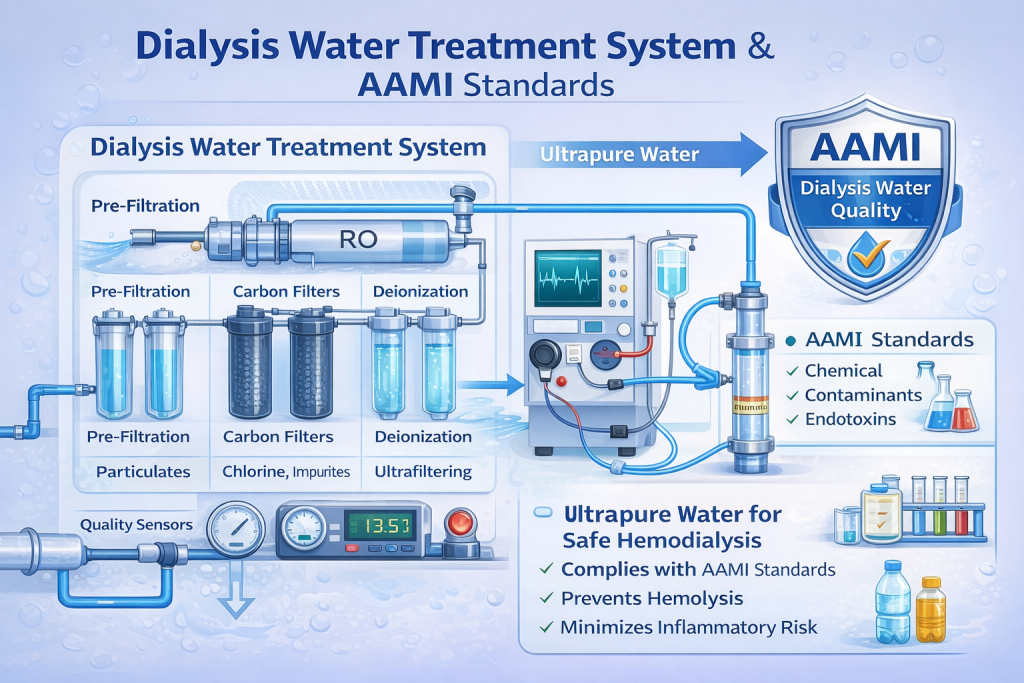
Water is the primary component of dialysate, accounting for more than 95% of its volume. During hemodialysis, a patient’s blood is exposed to hundreds of liters of dialysate each week. For this reason, water quality is a critical determinant of patient safety and treatment effectiveness.
Ultrapure water is essential to prevent chemical, microbial, and endotoxin-related complications during dialysis therapy.
AAMI Standards for Dialysis Water Quality
The quality of water used in dialysis is regulated by standards established by the Association for the Advancement of Medical Instrumentation (AAMI).
AAMI Water Quality Requirements
AAMI standards define strict limits for:
-
Chemical contaminants (e.g., aluminum, chloramines, heavy metals)
-
Microbial contamination
-
Endotoxin levels
These standards ensure that dialysis water does not cause:
-
Hemolysis
-
Inflammatory reactions
-
Long-term toxicity
-
Increased cardiovascular risk
Compliance with AAMI standards is mandatory for safe hemodialysis practice worldwide.
The Role of Ultrapure Water in Dialysate Safety
Ultrapure water is processed through multi-stage purification systems to remove:
-
Particulates
-
Dissolved chemicals
-
Bacteria and endotoxins
When combined with dialysate concentrates, ultrapure water produces a biologically safe dialysis solution that minimizes chronic inflammation and improves long-term outcomes, especially in high-flux and online dialysis therapies.
Importance of the Water Treatment System
A dialysis water treatment system is designed to consistently produce water that meets or exceeds AAMI requirements.
Key components typically include:
-
Pre-filtration and sediment filters
-
Activated carbon filters
-
Reverse osmosis (RO) units
-
Deionization (in some systems)
-
Ultrafilters for endotoxin removal
A well-maintained water treatment system is essential to protect patients from acute and chronic dialysis-related complications.
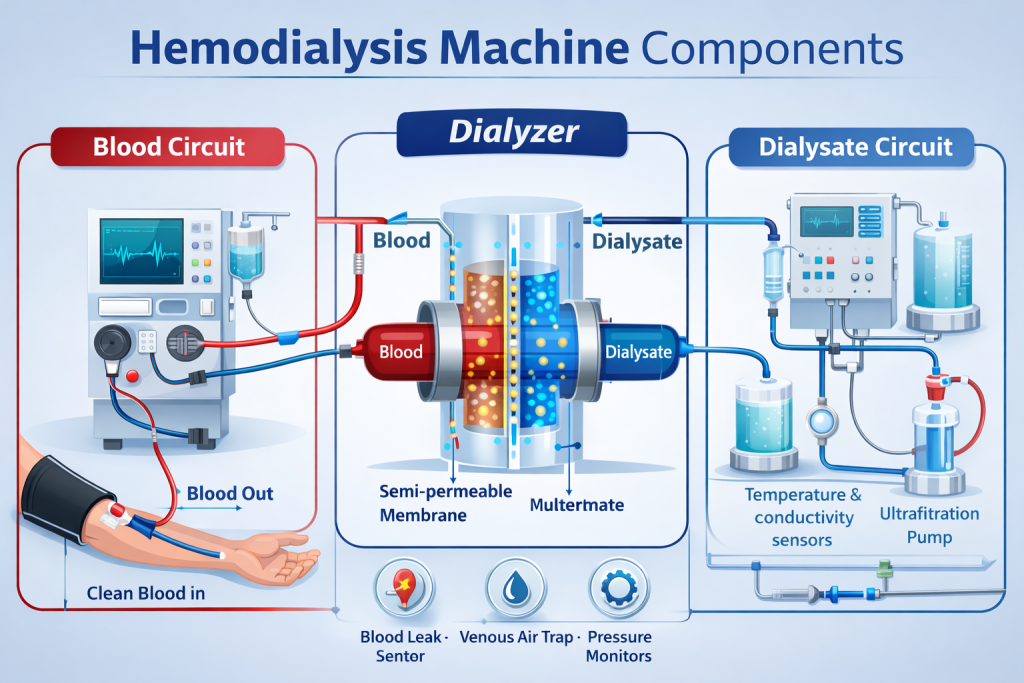
Control of Dialysate Temperature and Concentration
Temperature Regulation
Dialysate temperature must be carefully controlled to:
-
Prevent hypothermia
-
Maintain hemodynamic stability
-
Avoid patient discomfort
Inadequate temperature control may lead to vasoconstriction, hypotension, or thermal stress.
Dialysate Concentration Control
Precise control of dialysate electrolyte concentration is critical to prevent complications such as:
-
Hemolysis
-
Electrolyte imbalance
-
Acid–base disturbances
Dialysis machines continuously monitor conductivity to ensure accurate mixing of water and concentrates.
Dialysate Delivery Systems: Overview and Comparison
Central Dialysate Delivery Systems
Advantages:
-
Consistent dialysate quality
-
Efficient for large dialysis centers
-
Reduced handling of concentrates
Limitations:
-
High initial installation cost
-
Requires strict maintenance and monitoring
Individual Dialysate Delivery Systems
Advantages:
-
Flexible and easy to install
-
Suitable for smaller units or home dialysis
Limitations:
-
Increased workload per machine
-
Higher risk of variability if not properly maintained
Both systems can meet AAMI standards when correctly designed and operated.
Conclusion
Ultrapure water is a cornerstone of safe and effective hemodialysis. AAMI standards provide a clear framework for ensuring water purity, while advanced water treatment and dialysate delivery systems protect patients from serious complications. Proper control of water quality, temperature, and dialysate composition is essential to achieving high-quality dialysis care.