Hollow Fiber Dialyzer
Product Description:
A Hollow Fiber Dialyzer is a medical device used in hemodialysis to remove waste, toxins, and excess fluid from the blood. It contains semipermeable hollow fiber membranes that allow efficient exchange between blood and dialysate, acting as an artificial kidney for patients with renal failure.
Features:
- Made with high-quality, biocompatible hollow fiber membranes
- Provides efficient removal of toxins and metabolic waste
- High permeability for effective diffusion and ultrafiltration
- Optimized surface area for better dialysis performance
- Low resistance to blood flow, ensuring stable circulation
- Designed to minimize protein loss and preserve essential substances
- Sterilized (commonly by EO or gamma) and single-use
- Compatible with standard hemodialysis machines
- Compact and lightweight design for easy handling
Packing Method: 24pcs / Carton



To order, call: (+855) 093 265 939 (24/7 support)
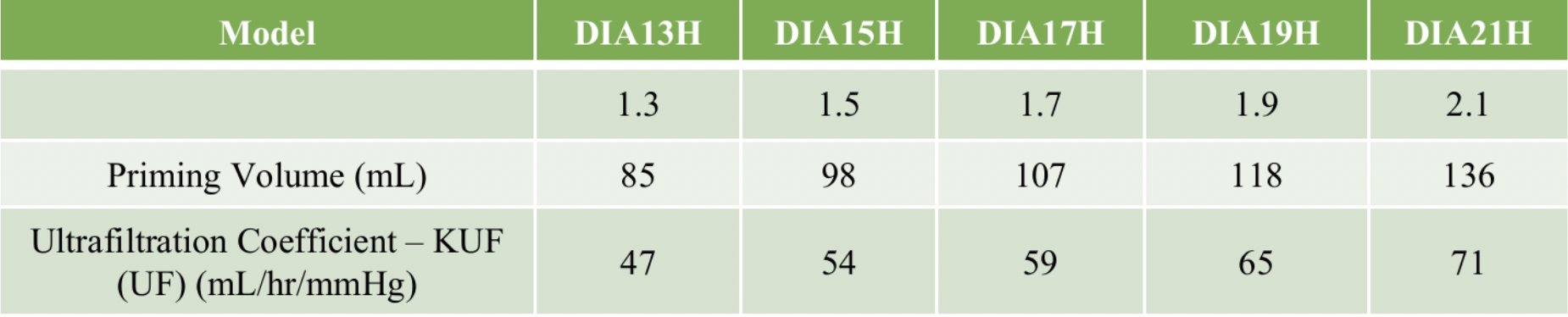
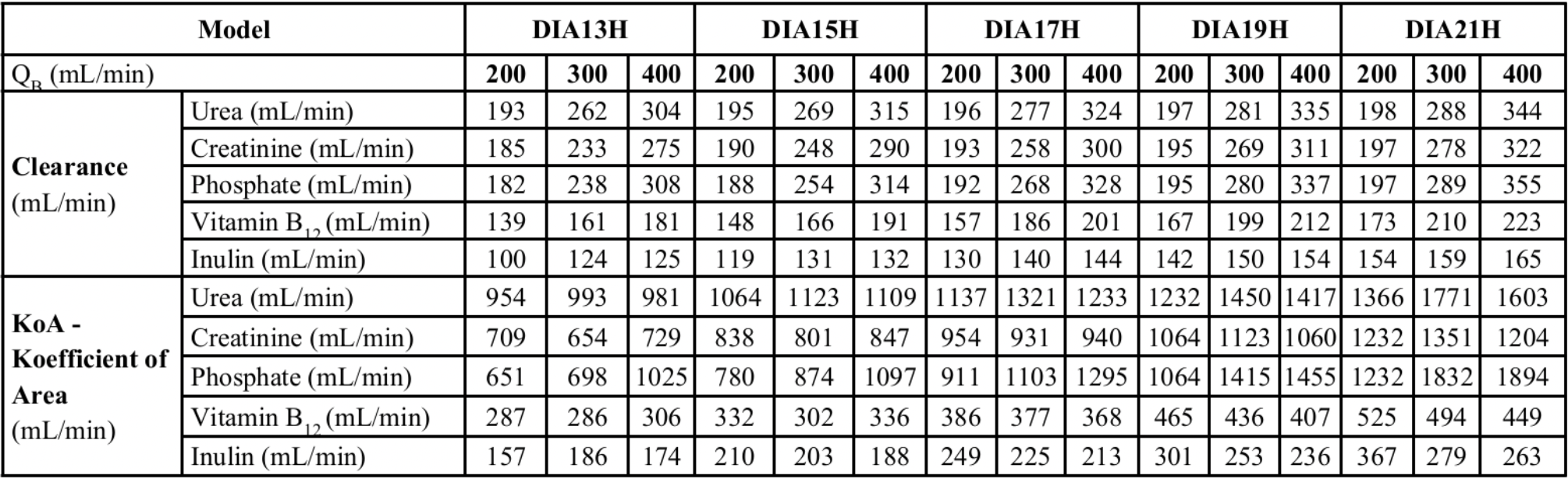
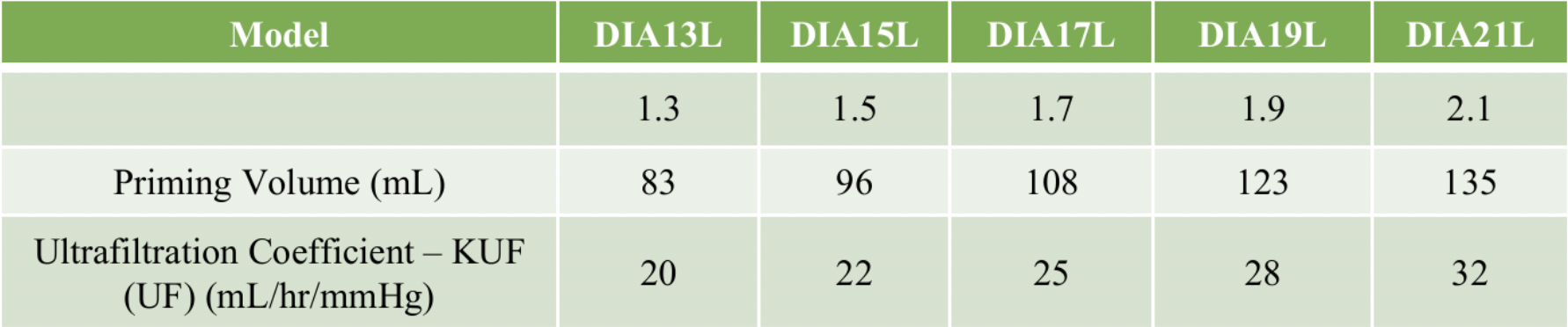
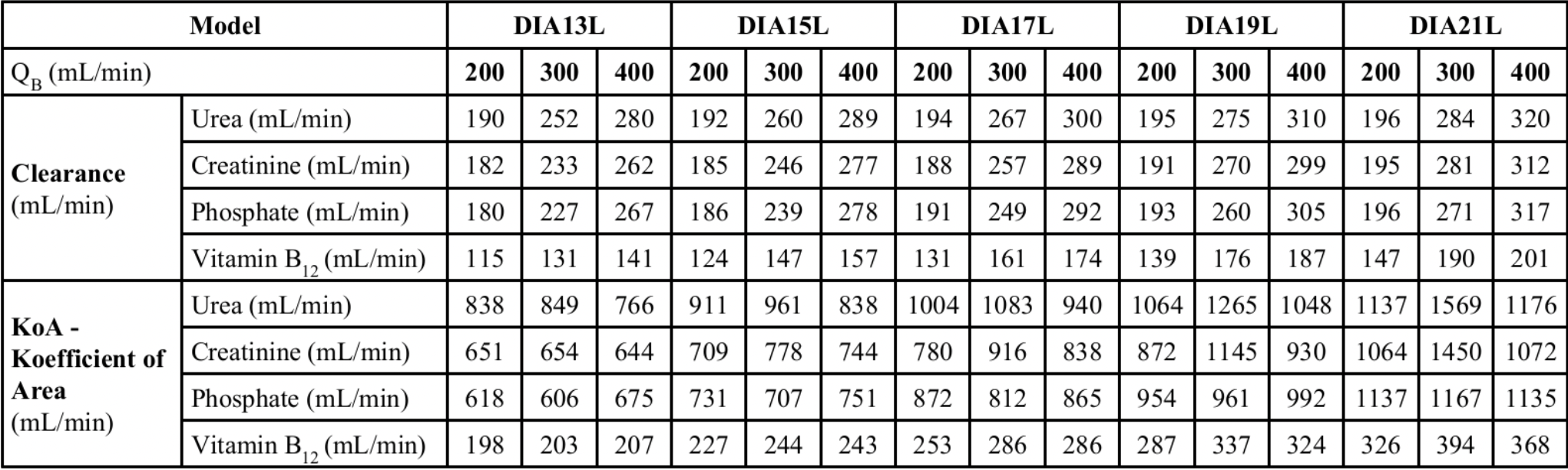
Specification:
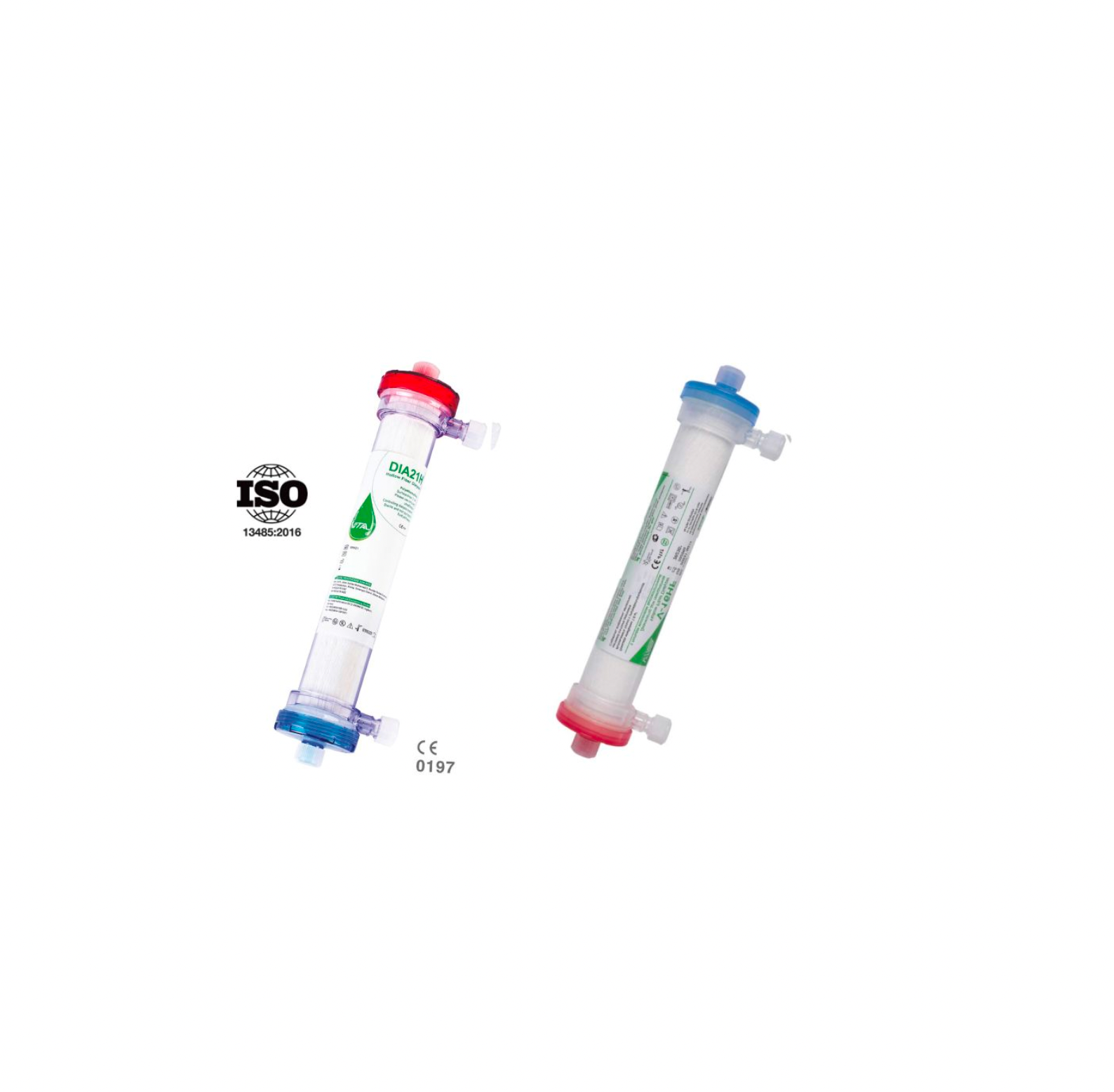
High – Flux
Low – Flux
Indication For Use: VITAL Hollow Fiber Dialyzer can be used for the hemodialysis treatment of acute and chronic renal failure. It is applicable to all dialysis patients.
Contraindications: No absolute contraindication for hemodialysis treatment. In case of any complication that would affect the stable condition, appropriate medical actions under the supervision of a physician or adequately trained personnel should be taken.
Cautions and Warnings:
- The dialysate and the blood should flow in counter-current.
- The maximum flow rate of dialysate is 800mL/min.
- DO NOT use on non-degas dialysate delivery systems.
- During the treatment, the transmembrane pressure shall not exceed 66kPa (500mmHg).
- The blood flow rate shall not be lower than 150mL/min, but not higher than 500mL/min.
- Use an aseptic technique when preparing the circuit and the dialyzer for use to avoid contamination.
- VITAL Hollow Fiber Dialyzer shall be used under certain medical supervision or adequately trained personnel. To avoid bacterial and pyrogenic contamination, it is suggested to use together with hemodialysis machine, dialysis water, concentrated solution and dialysate which are in accordance with the international standards.
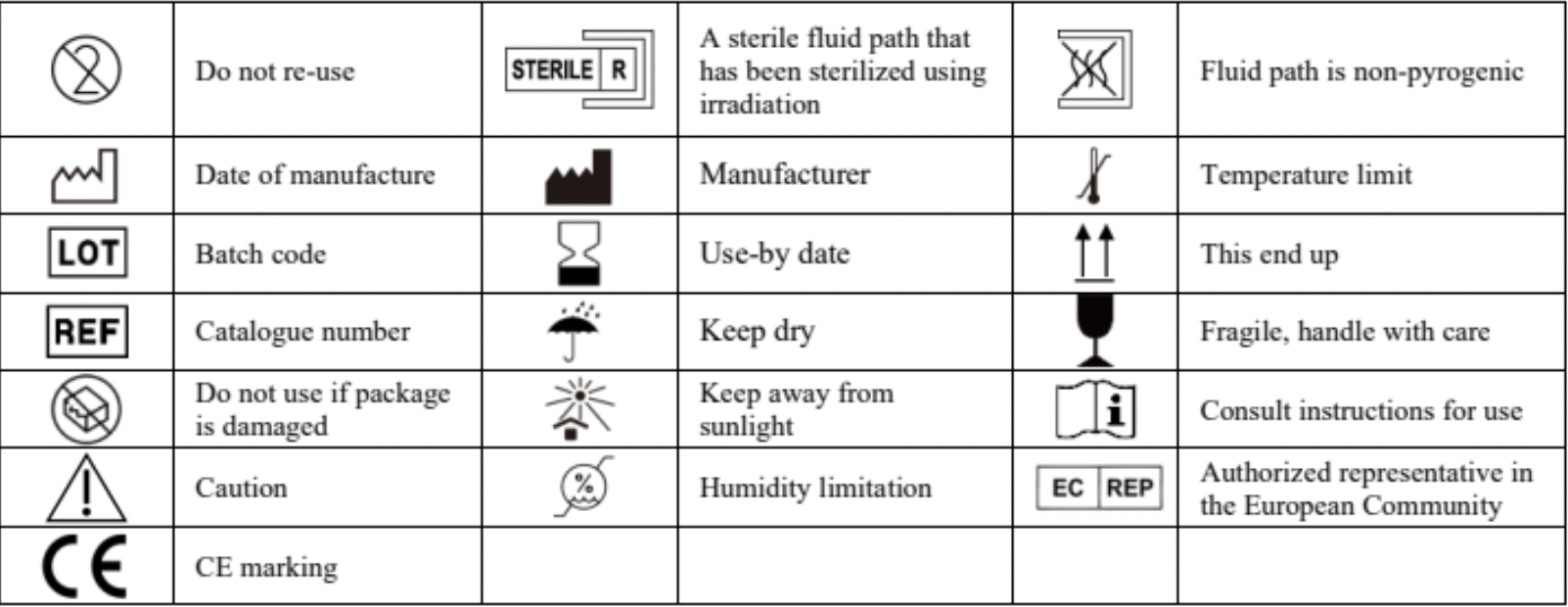
- The fluid pathways (blood and dialysate) is sterile and non-pyrogenic, sterilized by irradiation. DO NOT use the expired product. DO NOT use the device if package is damaged or if protective caps are not in place.
- This dialyzer is for single use and reuse is strictly prohibited. Reprocessing of this product may lead to adverse patient reactions and/or device failure. It should be discarded according to laws and regulations relevant to disposal of clinical medical waste so as to prevent infection.
- If abnormal conditions arise during the dialysis, such as bubbles, foreign matter, blood leak, or clotting, proper measures shall be taken according to doctor’s advice.
- If complications arise during the dialysis treatment, such as (but not limited to) hypotension; hypertension, air embolism, cramps, headache, nausea, shivers, fever, thirst; angina, arrhythmia, or hemolysis, proper measures shall be taken according to physician’s or adequately trained personnel’s advice.
- Please use only with ultrafiltration controlling dialysis system.
- Do not use expired products. Please check the expiration date on label before use.
- Ensure the connection between bloodline and dialyzer is strictly tight. Do not use this product if the bloodline connectors cannot fit for the dialyzer. During the treatment check that all of connectors are tight to prevent blood leakage or any air entry.
- If the device is used below a blood flow rate of 150mL/min, below a dialysate flow rate of 500mL/min, it may have diminished performance.
- If serious incident occurs, please inform the manufacturer or local competent authority.
Instructions for Installation
- Take out the dialyzer from the pouch, and check whether the dialyzer and its components are in good condition.
- Set up the dialyzer vertically to the holder.
- Make sure the dialyzer stays firmly in the holder.
Recommended usage method
1. Priming
- Prepare no less than 500mL normal saline or dialysate and add appropriate amount of heparin if needed under physician’s prescription.
- Place the arterial line and the venous line onto the dialysis machine according to the instructions for use of the extracorporeal blood circuit.
- Connect the arterial line, the venous line and the dialyzer.
- Control the flow rate of blood pump within 80~100mL/min, use normal saline or dialysis fluid until totally remove air from blood line and blood compartment of the dialyzer. The direction of normal saline or online dialysis fluid flow is arterial line dialyzer venous line, and counter-current is forbiddened.
- Turn the flow rate up to 200~300mL/min, connect the dialysate connector to the dialyzer, and remove all air from the dialysate compartment.
Note: Check for the presence of air in the blood circuit before patient connection and run extra priming/recirculation/ ultrafiltration if any air may remain.
2. Anticoagulation
- Carry out the anticoagulation according to prescription.
3. Termination of Treatment
- For reinfusion and completion of the treatment, follow the instruction on the dialysis machine in use.
- 500mL saline or substitution is normally sufficient to an adequate blood reinfusion. Turn off the blood pump and disconnect the patient’s venous line.
Note: DO NOT turn off the air monitor system before blood returns completely to prevent the air flowing into the patient from the blood line.
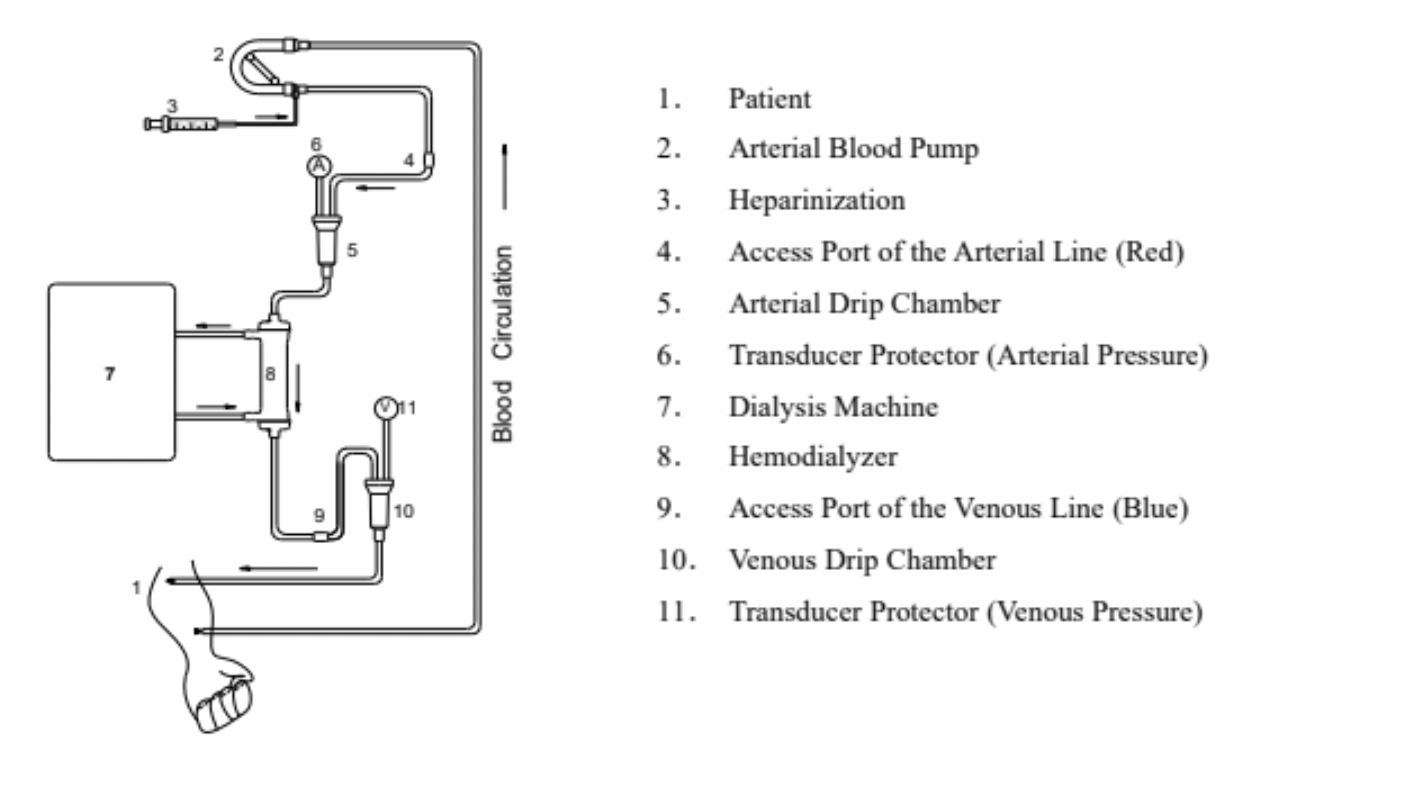
A typical connection diagram