Nutrition Management for Hemodialysis Patients
Proper nutrition plays a vital role in maintaining health and improving outcomes for patients undergoing hemodialysis (HD). Because dialysis partially replaces kidney function—but not completely—patients must carefully manage their diet, fluid intake, and body weight between treatment sessions.
A structured nutrition plan helps control electrolyte balance, prevent complications, and maintain adequate energy and protein levels.
Key Nutrients to Control in Hemodialysis
Potassium Control
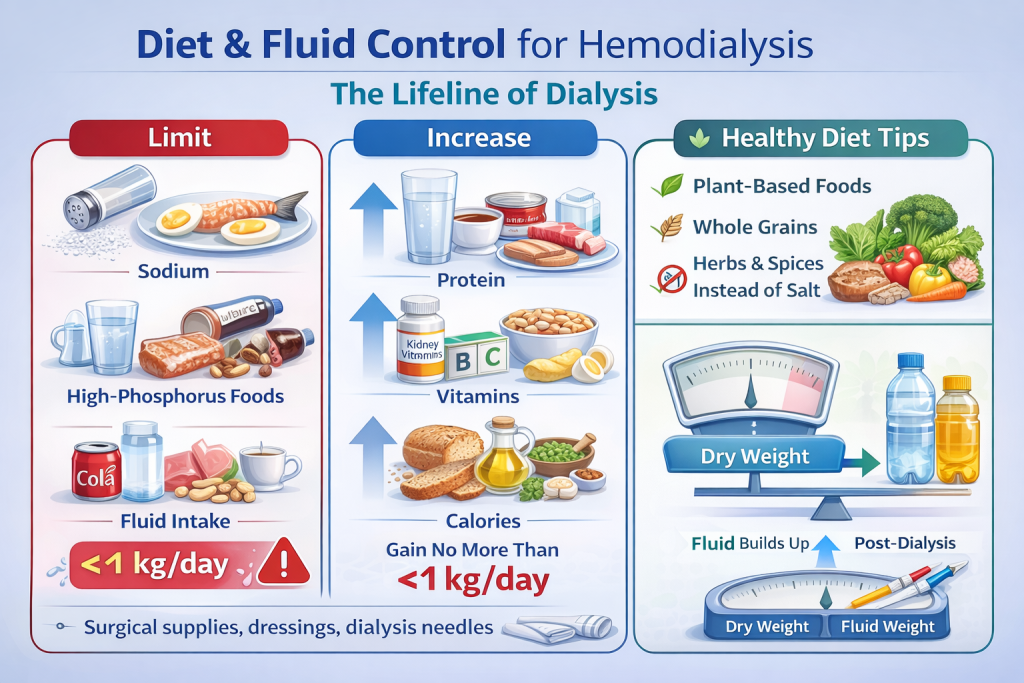
Excess potassium can lead to dangerous heart rhythm disturbances. Since impaired kidneys cannot remove potassium effectively, dietary control is essential.
Patients should:
-
Limit high-potassium foods (e.g., bananas, oranges, potatoes)
-
Follow individualized potassium targets based on blood test results
Phosphorus Control
High phosphorus levels contribute to bone disease and cardiovascular complications in dialysis patients.
Foods high in phosphorus include:
-
Processed foods
-
Dairy products
-
Nuts and seeds
-
Cola beverages
Phosphorus intake should be controlled through diet and, when prescribed, phosphate binders.
Sodium Restriction
Excess sodium increases:
-
Thirst
-
Fluid retention
-
Blood pressure
Reducing sodium intake helps control interdialytic weight gain and improves blood pressure management.
Fluid Intake Management
Because urine output is often reduced or absent in HD patients, excess fluid accumulates between dialysis sessions.
Fluid intake should be carefully controlled to:
-
Prevent edema and shortness of breath
-
Reduce cardiovascular stress
-
Avoid excessive weight gain between treatments
Nutrients That Need to Be Supplemented
Increased Protein Intake
Hemodialysis removes not only waste products but also amino acids and small amounts of protein.
Patients are encouraged to:
-
Increase high-quality protein intake
-
Prevent muscle loss and malnutrition
Protein needs in HD patients are higher than in the general population.
Renal-Specific Vitamins
Water-soluble vitamins are lost during dialysis. Renal-specific vitamin supplements are often recommended to replace:
-
B-complex vitamins
-
Vitamin C (in controlled amounts)
Standard multivitamins may not be appropriate for kidney patients.
Adequate Calorie Intake
Sufficient calories are necessary to:
-
Maintain body weight
-
Prevent protein-energy wasting
-
Support overall energy needs
Calories should come from safe carbohydrate and fat sources that align with renal dietary restrictions.
Recommended Dietary Pattern for Hemodialysis Patients
A balanced dietary approach may include:
-
Emphasis on plant-based foods with controlled potassium content
-
Whole grains in appropriate portions
-
Use of herbs and spices instead of salt to enhance flavor
-
Avoidance of highly processed and sodium-rich foods
This approach supports blood pressure control and overall metabolic health.
Understanding Dry Weight and Fluid Weight
Dry Weight
Dry weight is the patient’s body weight after dialysis when excess fluid has been removed and blood pressure is stable. It represents the target weight that dialysis aims to achieve.
Fluid Weight Gain
Interdialytic weight gain refers to weight gained between dialysis sessions due to fluid intake.
Weight Management Goal
To reduce cardiovascular strain and dialysis-related complications, patients are advised to:
-
Limit fluid-related weight gain to no more than 1 kg per day
-
Follow individualized fluid restrictions as prescribed by healthcare providers
Conclusion
Effective nutrition and weight management are essential components of hemodialysis care. By controlling potassium, phosphorus, sodium, and fluid intake—while ensuring adequate protein, vitamins, and calories—patients can improve treatment tolerance and long-term health outcomes. Understanding and maintaining dry weight is key to achieving safe and effective dialysis therapy.