Haemodialysis Catheter Kit & Set
Product Description
The ABLE® Haemodialysis Catheters (HDC) are a sterile, single use range of short term polyurethane catheters designed to build a temporary blood connection between the patient and the dialysis machine for acute and short-term dialysis. They are available in three configurations: single, double and triple lumen and in a variety of lengths. The multi lumen variants provide dedicated lumens for haemodialysis therapy, infusion therapy, pressure monitoring.
Features & Benefits
- Soft Tip: Reduces trauma to vessel wall upon introduction and in-situ. the radiopaque catheter and tip facilitates vessel location when visualized by X-Ray.
- Biocompatible Polyurethane: Tested for toxicity and hemocompatability, and become softer in body temperature.
- Easily-find under X-Ray: Sufficificently radiopaque materials ensures the correct placement of catheter.
- Curved Extensions: The extensions are curved for jugular vein approaches to make the catheter more comfortable for the patient.
- Rotating Suture Wing: Rotating suture wing provides secure external anchoring.
- Antimicrobial heparin cap: Specially-made adaptor helps to avoid infection
- Multi-lumen available: Available single double,triple lumen for infant and adudt.
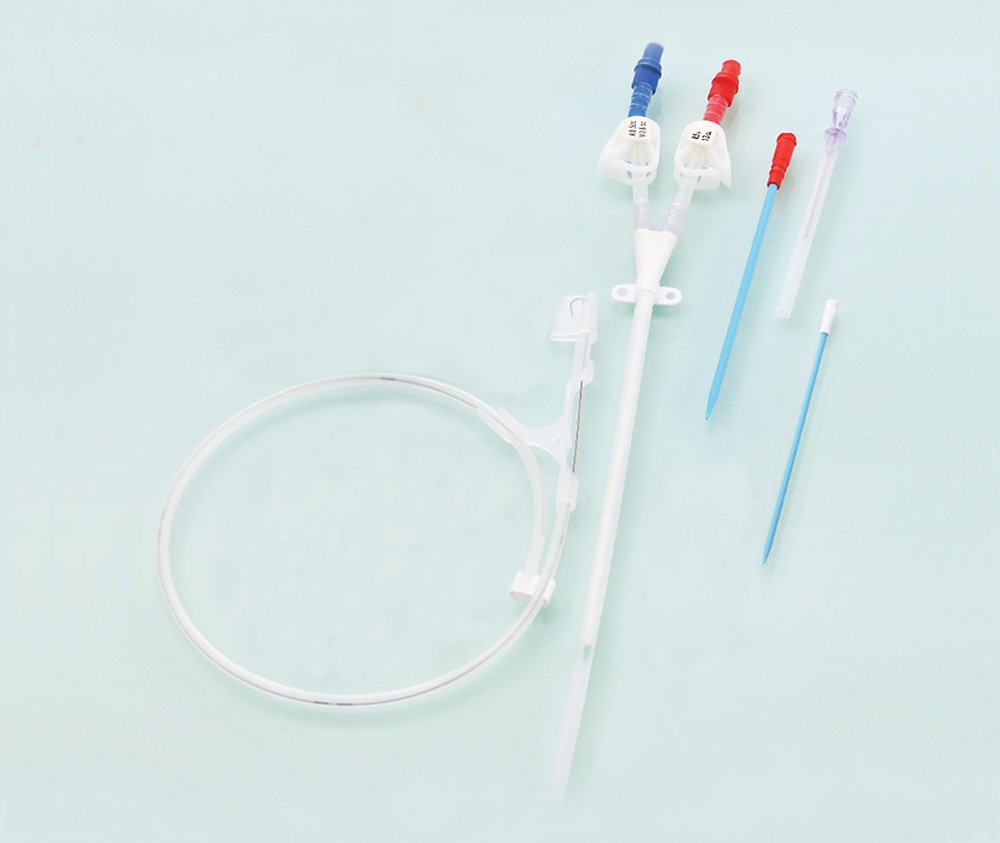
- Compund-packaging tray: Available lots components. Complete Insertion Set, Supplied with the economical basics for Seldinger Technique Insertion. Catheter, vessel dilator, guidewire, introducer needle, and injection caps.

To order, call: (+855) 093 265 939 (24/7 support)
Specifications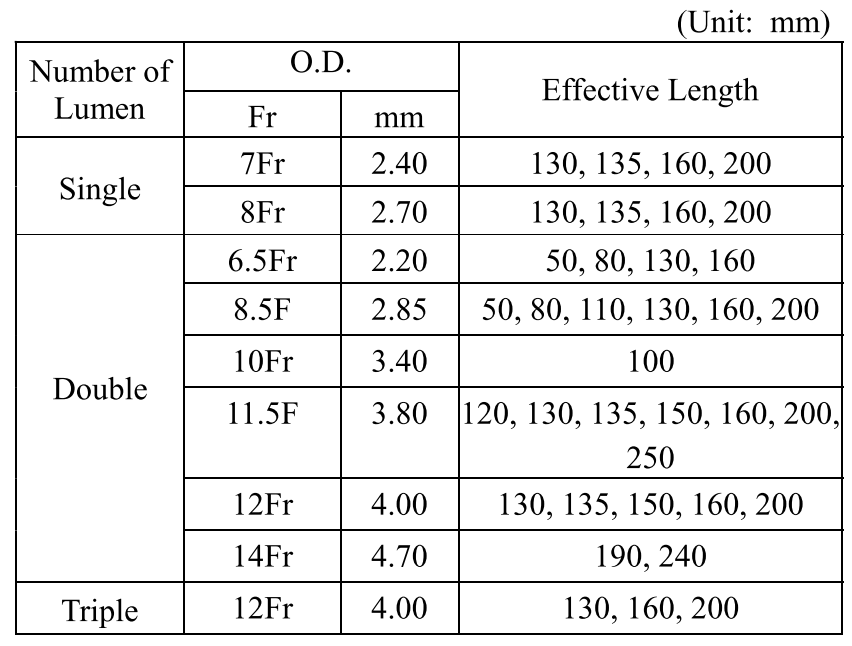
Intended use:
The ABLE® Haemodialysis Catheters may be applicable to the one of following therapy:
- To supply the temporary blood vessel access in haemodialysis treatment;
- Monitor of central venous pressure;
- Continuous or discontinuous venous transfusion.
The Catheter is surgically penetrated into three optional puncture points depended on the clinical requirement with Seldinger Technique. The Insertion Sites are :
- Internal jugular vein;
- Subclavian vein;
- Femoral vein.
It is possible to be inserted inside the body for less than 30days. If duration exceeds 30 days, it may occure the risk of combining the catheter and inside tissue, which result in serious incident.
Configuration
The main raw materials used in the product are polymeric materials and stainless steel. The major components of the KIT are: Catheter, Guidewire, Dilator, Syringe and Puncture Needle. The major components of the SET are: all the components of the KIT, Surgery towel, Disinfect brush, Medical gauze, Absorbent cotton, medical glove, Suture needle and Surgery sheet.
Insertion Operation Instruction
Read the manual carefully before the operation. The inserting, guiding and remove of the catheter must be operated by experienced and trained physicians. The beginner must be directed by the experienced.
- The procedure of inserting, planting and remove should be under strict aseptic surgical technique.
- To choose the catheter of adequate length to ensure it can reach to the right position.
- To prepare gloves, masks, gowns, and partial anesthesia.
- To fill the catheter with 0.9% saline
- Needle Puncture to the selected vein; then thread the guide wire after assuring the blood is well aspirated when syringe is withdrawn. Caution: The color of the aspirated blood can’t be taken as a proof to judge that Syringe has been punctured to the vein.
- Gently thread the guide wire into the vein. Don’t force through when the wire encounters resistance. Withdraw the wire a bit or then advance the wire rotatively. Use ultrasonic to ensure a correct insertion, if necessary. Caution: The length of guide wire depends on the specificase. The patient with arrhythmia should be operated by the monitor of electrocardiograph.
- Extract the introducer needle; hold the guidewire steady at the desired position of the vein or tract. Thread a dilator over the end of the guidewire and dilate the vein/tract.
- Thread the catheter along the guidewire to the desired position, and then remove the guidewire gently.
- Infuse heparinized saline in the catheter lumen, verify the smooth flow and the catheter in the right vein. Screw the needle cap. Caution: Not allowed to clamp the catheter tubing.
- The catheter should be able to detect in the desired position, check it with the X-ray measurement. In case of the arrhythmia, retreat the catheter tip until the symptom disappears. Caution: Failing to determine the catheter at right position, may result in very serious damage, even to fatal complication.
- Secure the catheter to the skin via the catheter fixture. Do not suture the catheter tubing. Cover the puncture point by the aseptic wound dressing.
- Before dialysis, check all the connection parts with the patient carefully. Do not pull the catheter by strong force to prevent the rapture or breakage of the catheter. After removing the catheter, press the puncture point until no blood (about 10-15 min), and then cover the wound dressing.
Contraindications
- Infection or cut wound around the puncture area.
- Dysfunction of blood coagulation.
- During the anticoagulant treatment.
- Symptoms of inadaptability to puncture operation, such as Pneumothorax, vein sclerosis.
- Abnormal or unclear anatomical situation at the penetration area, such as sever emphysema, obviously inadaptability from previous operation.
Prevention of Complication
- The catheter is to be inserted and removed only by a qualified, licensed physician or nurse; the medical techniques and procedures described in these instructions do not represent all medically acceptable protocols, nor are they intended as a substitute for the physician’s experience and judgment in treating any specific patient.
- Before conducting the operation, physician needs to acknowledge about the potential complications in treating any specific patient, and be ready to take adequate preventive action if any emergency occurs.
- Do not use catheter if package has been damaged or previously opened. Do not use catheter if it is crushed, cracked, cut, or otherwise damaged, or any part of the catheter is missing or damaged.
- Re-use is strictly prohibited. Reuse could cause infection, if serious, it may result in death.
- Use strictly aseptic technique.
- Securely fasten the catheter.
- Check puncture site daily to detect any signs of infection or any disconnection/disposition of the catheter
- Periodically replace the wound dressing, rinse the catheter with heparinized saline.
- Ensure a secure connection to the catheter. It is recommended that only luer-lock connections be used with the catheter in fluid infusion or blood sampling to avoid a danger of air embolism. Try to exhaust the air in the operation.
- Do not use acetone or ethanol solution on any part of the catheter tubing as this may cause catheter damage.
Warning and Precautions
- Once inserting guide wire or catheter with resistance, thread and/or draw by force is strictly prohibited. Proper preventive treatment is suggested to ensure the safety of the patient.
- For long-term treatment, the puncture site may intend to be infected, use strictly aseptic technique and replace the dressing daily.
- Watch out for any early signs of potential complications, such as infection, embolism or phlebitis. Treatment needs when any of the signs occurs.
- Keep the puncture site clean, dry and aseptic with caution.
- Periodically infuse the catheter with sufficient sterilized heparinized normal saline to keep the lumen/tract fluid, and use sheath to seal the end.
- Before dialysis, recommend extracting the fluid in the catheter lumen to prevent the systemic syndrome from heparin.
- Before infuse the heparin, rinse the catheter to remove the previous heparin solution by using aseptic saline.
- In case of thrombus in the lumen, rinse by force is NOT Allowed, try suck the clog by syringe firstly, if it doesn’t work, use blood clot dissolvent.
Warning: Only experienced physician is allowed. - In case of not sufficient flux, consider the following procedures:
– Adjust the location of catheter tip according to the specific vascular.
– Exchange the vena with the vascular to increase the blood flux.
– Refer to the procedure of Item 8 if caused by thrombus.
– To reduce any risk from incompatibility of other devices, replacement of accessories with other devices is prohibited. - Do not resterilize.
Storage
The packed products must be stored in a cool, ventilate and dry environment, at a temperature under 40℃ and at a relative humidity of 30% to 80% RH. Protect the packed products from direct sunlight, mice and or moth-eaten. Sterilization is valid for three years. Storage is suggested to inspect quarterly. Don’t use the damaged products of any kind.